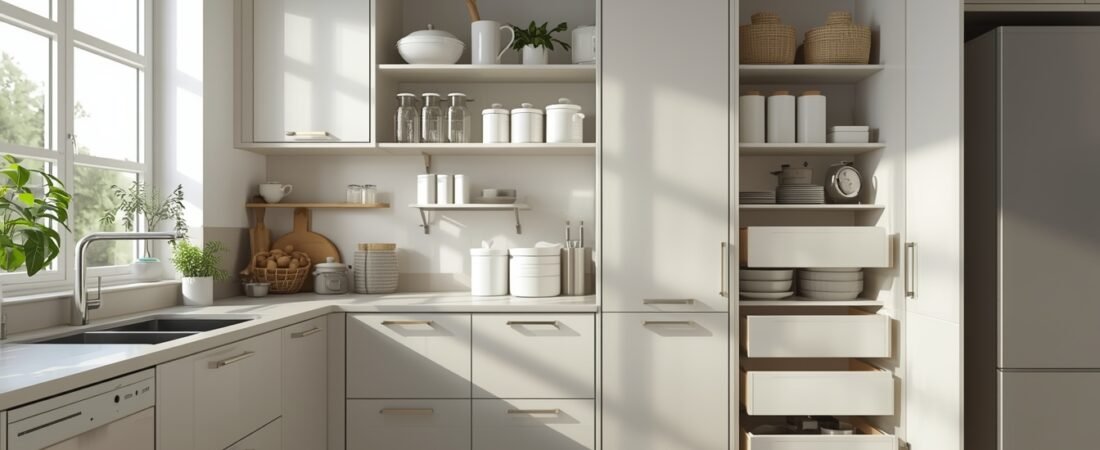
Many homes include a mixture of open and closed storage. Shelves may display everyday items in plain view, while cabinets and drawers hide belongings behind doors. Both approaches can be useful, but they serve different practical purposes within a home.
Choosing between open and closed storage is not simply a design decision. The type of storage used can influence how easy it is to maintain order, locate items, and keep spaces feeling calm.
Open storage keeps items visible
Open storage refers to shelves, racks, or storage surfaces where items remain visible at all times. Because nothing is hidden behind doors or drawers, these systems make it easy to see what is available and quickly retrieve items when needed.
This visibility can be particularly useful for objects used frequently.
Closed storage reduces visual load
Closed storage includes cabinets, drawers, wardrobes, and other spaces that conceal items behind doors or panels. These systems hide belongings from view, which can help rooms feel less visually busy.
Many homes rely on closed storage to manage items that are used less frequently or that do not need to remain visible.
The broader storage principles behind these choices are explained in Storage Solutions Explained: Choosing Storage That Actually Works.
Open storage requires consistency
One challenge of open storage is that items remain visible at all times. While this makes access easier, it also means that disorganisation becomes immediately noticeable.
- It works best when the number of items is limited.
- Categories should remain clearly defined.
- Objects should be used and returned regularly.
Closed storage can hide problems
While closed storage helps maintain a calm appearance, it can sometimes conceal underlying organisation issues. Cabinets and drawers may appear tidy from the outside even when their contents are difficult to manage.
This is one reason the difference between holding items and arranging them effectively matters. That distinction is covered in Organisation vs Storage: Understanding the Difference.
Different rooms benefit from different types
Most homes benefit from using both open and closed storage in different areas. Each approach supports different activities and types of belongings.
Kitchens often combine both systems, while living areas may rely more heavily on closed storage to maintain visual calm.
Balance usually works best
Effective storage systems often balance the accessibility of open storage with the simplicity of closed storage. Frequently used items benefit from being easy to reach, while less commonly used belongings can remain stored out of sight.