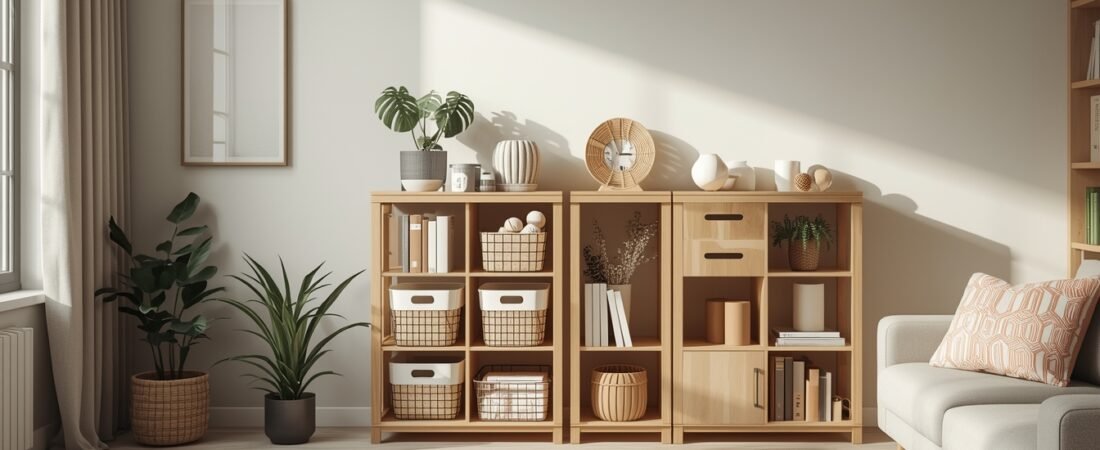
Rental homes often present unique organisation challenges. Unlike owned properties, renters typically cannot make permanent changes to cabinets, walls, or built-in storage. These restrictions can make it more difficult to adapt storage systems to individual needs.
Despite these limitations, rental homes can still be organised effectively by focusing on portable storage and flexible systems.
Rental restrictions shape organisation choices
Many rental agreements restrict permanent modifications to the property.
- No permanent shelving installations
- Limits on wall-mounted storage
- No modification of cabinets or closets
- Restrictions on structural changes
Portable storage is often the best fit
Portable storage provides flexibility in rental homes because it can be introduced without modifying the property.
- Freestanding shelving units
- Rolling storage carts
- Stackable containers
- Under-bed storage boxes
These options allow renters to add capacity while keeping the space adaptable. The practical role of storage choices is discussed further in Storage Solutions Explained: Choosing Storage That Actually Works.
Built-in storage may need to do more
In rental homes, closets and cabinets may need to store several categories at once.
- Mixed storage categories
- Overcrowded closets
- Difficulty locating items
Flexible systems support future moves
Because renters may move periodically, organisation systems benefit from flexibility.
- Modular shelving
- Portable bins
- Furniture with built-in storage
This allows the system to move and adapt with the household.
Organisation is still achievable
Although rental homes limit structural changes, organisation remains entirely possible. When storage placement supports daily routines, renters can maintain practical spaces. That routine connection is explored in How Organisation Affects Daily Use of Space.