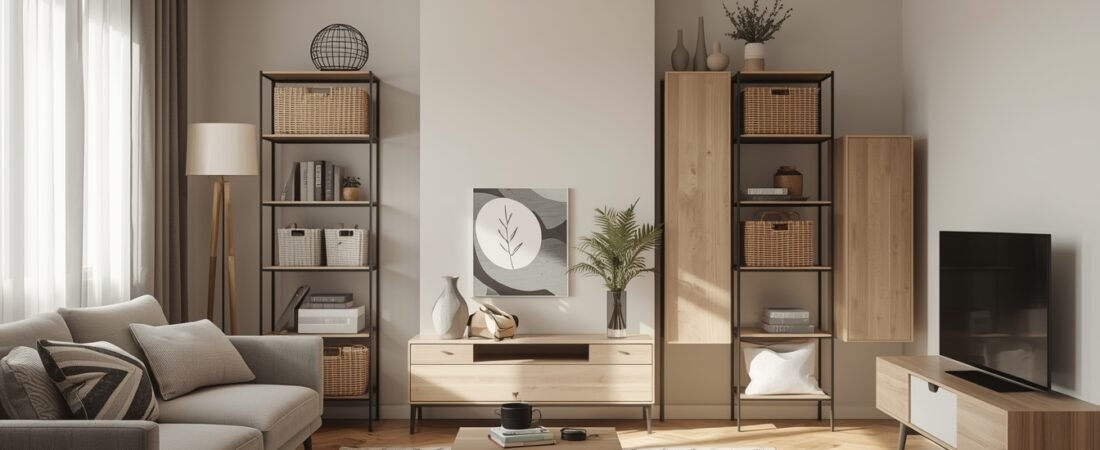
Shared homes often require individuals to store personal belongings within common living spaces. Bedrooms, closets, bathrooms, and shared storage areas may need to accommodate the needs of several people at once.
Managing personal storage in these environments requires clear boundaries and simple systems.
Personal items often mix with shared supplies
Shared homes typically contain both personal belongings and household supplies.
- Individual clothing and personal items
- Shared kitchen equipment
- Cleaning supplies used by everyone
Without clear boundaries, these categories may gradually mix.
Storage zones help separate belongings
Creating simple zones for each person can help maintain organisation.
- Designated shelves for each household member
- Separate drawers for personal belongings
- Shared cabinets for household items
The broader principles of shared-space organisation are explored in Organising Small and Shared Spaces Without Permanent Changes.
Simple systems are easier for everyone
Shared homes benefit from systems that are easy for everyone to follow.
- Clear categories
- Accessible storage areas
- Minimal complexity
Communication supports the system
Shared homes often function best when household members understand how storage areas are intended to work. That does not require formal rules, but it does benefit from simple, consistent boundaries.
Clear boundaries make shared homes easier to manage
When personal storage zones are clearly defined, shared homes can remain organised without requiring complicated systems. The relationship between storage placement and routine behaviour is discussed further in How Organisation Affects Daily Use of Space.