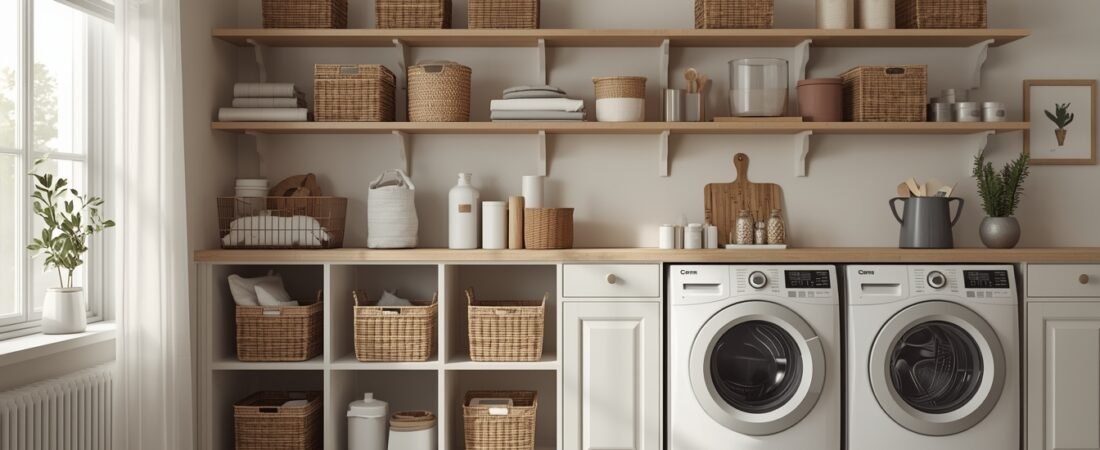
Many homes experience clutter not because storage is insufficient, but because everyday routines gradually allow items to accumulate. Small actions repeated daily often determine whether spaces remain organised or slowly become crowded.
Simple household routines can help prevent clutter from forming in the first place.
Small habits influence organisation
- Leaving items on surfaces instead of returning them
- Postponing sorting tasks
- Allowing storage areas to gradually fill
These small habits can slowly affect how organised a space feels.
Routine placement helps maintain order
- Keys placed in the same entryway location
- Tools returned to a specific drawer
- Mail sorted when it arrives
Over time, these actions become automatic and reduce the need for later organisation. The connection between storage placement and behaviour is explored in How Organisation Affects Daily Use of Space.
Daily reset habits can help
- Clearing surfaces before leaving a room
- Returning tools after completing tasks
- Sorting items before the end of the day
These resets help prevent clutter from accumulating.
Simple systems reduce effort
When organisation systems are easy to follow, routines become easier to maintain. Clear storage categories and accessible locations help support those habits.
The broader structure behind these routines is explained in Household Systems and Routines That Support Organised Homes.
Routines help homes stay manageable
While occasional decluttering may still be helpful, everyday routines often play the most important role in preventing clutter. Small habits repeated consistently can help homes remain organised and easier to maintain over time.