
Home organisation often starts with good intentions. A system is set up, storage is arranged, and spaces feel easier to use. Over time, though, many homes quietly drift back into disorder. This doesn’t usually happen because people stop caring. It happens because everyday living gradually pushes systems beyond what they were designed to handle.
Understanding why organisation breaks down helps explain why “doing it again” rarely fixes the problem long term.
Organisation Is Built for a Moment in Time
Most organisation systems are created based on how a home looks and functions at a specific point. The number of people living there, the types of belongings owned, and daily routines all influence how storage and layouts are planned.
As life changes, the system often stays the same. New items arrive, habits shift, and responsibilities grow, but the underlying structure doesn’t adjust. Over time, the gap between how the space is used and how it was organised widens.
Storage Slowly Becomes Overloaded
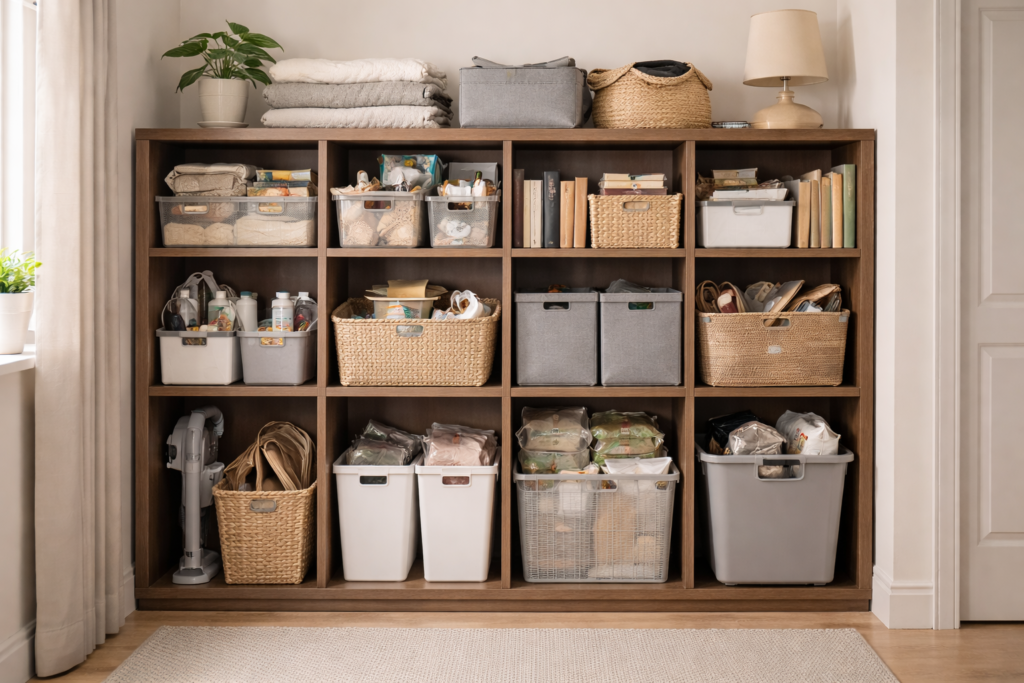
Storage spaces tend to fill incrementally. Items are added a little at a time, often without removing anything else. Because this happens gradually, it’s rarely noticed until drawers no longer close or surfaces begin to collect piles.
When storage reaches capacity, organisation breaks down not because items are messy, but because there is no longer enough room for things to return to their place easily.
Convenience Starts to Override Systems
Early on, organisation relies on habits. When returning items to their place feels simple, people tend to do it. As systems become more complex or overcrowded, convenience takes over.
Items are set down “just for now,” often in visible areas. These temporary placements slowly become permanent, and the system loses its ability to guide behaviour without effort.
Systems Compete With Daily Fatigue
Organisation requires small decisions throughout the day. Where something goes, whether it belongs, and how it should be stored all require mental energy.
As daily demands increase, the effort required to maintain organisation can feel disproportionate to its benefits. When fatigue sets in, systems that rely on constant decision-making tend to fail first.
Organisation Is Treated as a One-Time Task
Many homes treat organisation as a project with an end point. Once completed, it’s expected to hold indefinitely. In reality, organisation behaves more like maintenance than installation.
Without small adjustments over time, even well-designed systems drift out of alignment with how a space is actually used.
Breakdown Is Usually Gradual, Not Sudden
Most organisational decline isn’t dramatic. It appears as small inefficiencies, minor clutter, or spaces that feel slightly harder to use than they used to.
Because the change is gradual, it’s often tolerated longer than it should be. By the time it becomes noticeable, the system may no longer support daily routines at all.