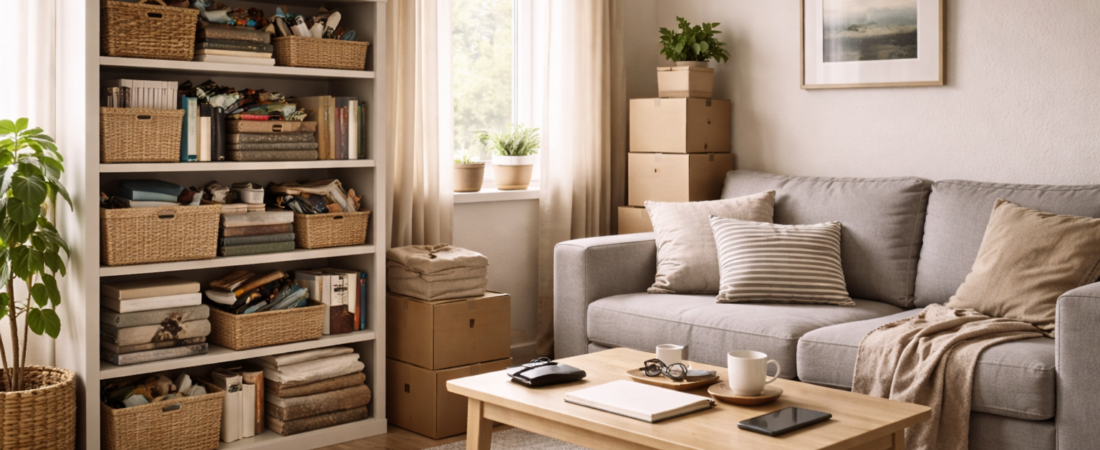
Most homes do not run out of storage because they are too small. They run out of storage because the way items are stored no longer matches the way the space is used.
Storage problems usually develop gradually. New items come in. Rooms change purpose. Daily routines shift. Over time, the original storage setup no longer supports current needs.
This article explains the common reasons storage fills up and what is usually happening behind the clutter.
Storage Was Never Planned Around Real Use
Many homes are set up with default storage: a wardrobe, a few kitchen cabinets, a hallway cupboard, maybe a garage shelf.
These spaces are often arranged once and rarely reviewed.
When storage is not planned around how items are actually used, several things happen:
-
Frequently used items migrate out of cupboards
-
Surfaces become secondary storage
-
Drawers fill with mixed, unrelated items
-
Open spaces slowly disappear
Storage that “exists” is not the same as storage that works. Functional storage is placed where items are used and sized according to volume, not appearance.
Items Increase but Storage Does Not Adjust
Households change over time. More people, new hobbies, remote work, school supplies, paperwork, seasonal items.
Storage capacity, however, usually stays fixed.
This mismatch creates pressure in three predictable ways:
-
Overflow into adjacent rooms
-
Double-stacking inside cupboards
-
Temporary solutions that become permanent
Without periodic reassessment, even a well-organised home will feel full.
Storage Is Decorative Instead of Functional
Some storage solutions prioritise appearance over capacity. Small baskets, shallow shelves, or decorative boxes may look tidy but hold limited volume.
When storage is chosen for style rather than function:
-
Items are compressed or forced into small containers
-
Multiple containers are required for one category
-
Access becomes difficult
-
Maintenance becomes tiring
Effective storage supports easy access, correct sizing, and simple maintenance.
If you want to understand how to evaluate storage more practically, see Storage Solutions Explained: Choosing Storage That Actually Works, which outlines how to assess size, access, and placement before adding new storage.
Categories Are Mixed Instead of Defined
When storage fills up quickly, the issue is often unclear categories.
Examples include:
-
One drawer for “miscellaneous”
-
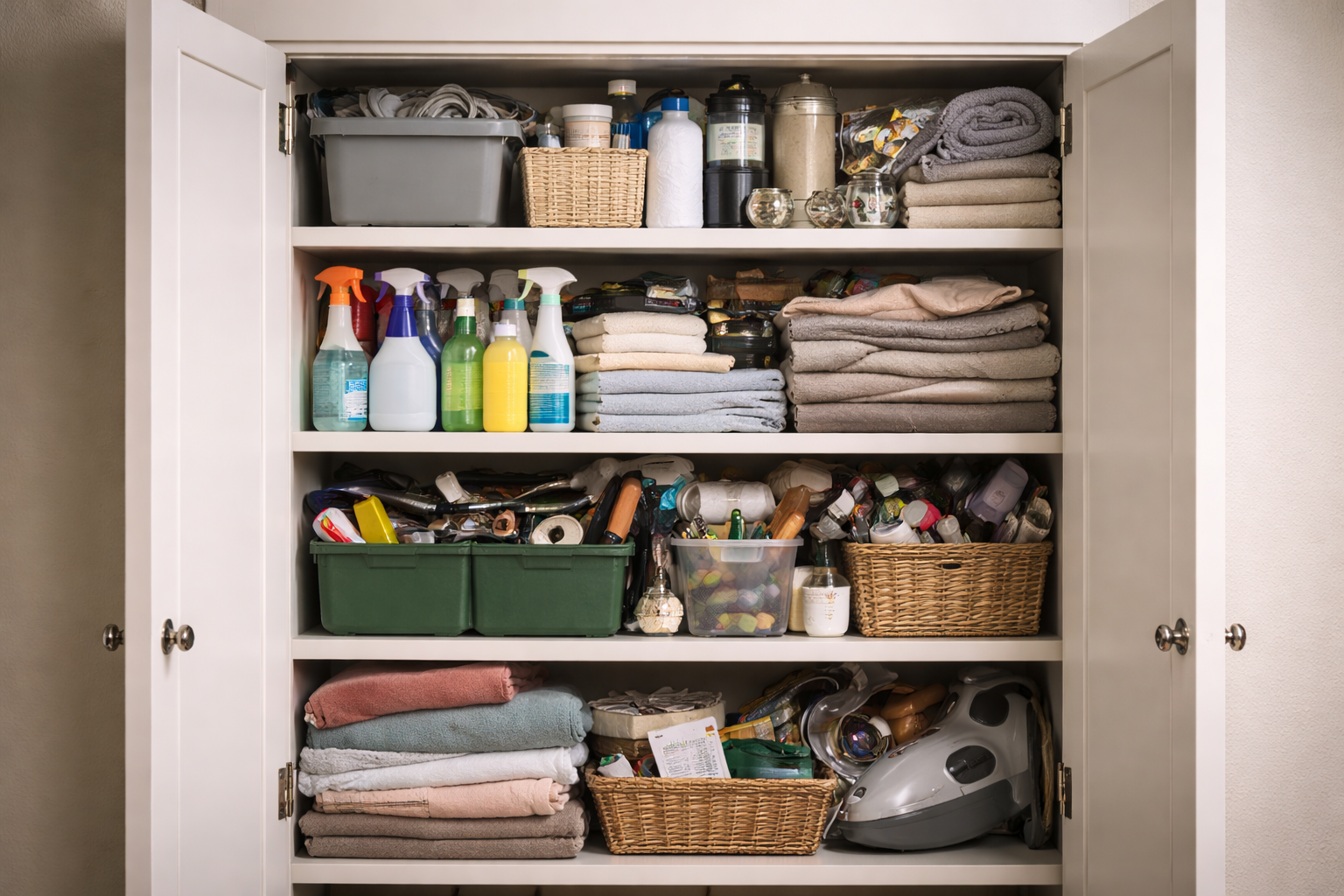
A cupboard holding cleaning supplies, batteries, tools, and spare bulbs
-
A wardrobe storing clothes, documents, and seasonal decorations
Mixed categories create invisible duplication. Items are bought again because they cannot be found. This increases volume and reduces available space.
Clear category boundaries reduce the amount of storage required because items are easier to see and manage.
Storage Exists but Is Hard to Access
High shelves, deep cupboards, stacked tubs, and tightly packed drawers reduce usable capacity.
When access is difficult:
-
Items are left out instead of put away
-
Lower shelves fill first
-
Higher or deeper areas become forgotten zones
Usable storage is measured by how easily items can be retrieved and returned. Difficult access effectively shrinks available space.
“Temporary” Piles Become Permanent
Many storage problems begin as short-term holding areas:
-
A stack of papers to sort later
-
A box of items to donate
-
Seasonal gear waiting to be stored
Without a defined endpoint, these piles stabilise. They claim floor space, tabletops, or corners and gradually become part of the room layout.
Homes feel full not because of volume alone, but because circulation space shrinks.
Storage Is Added Without Reducing Volume
A common response to full cupboards is to add more containers or shelving.
This can help temporarily, but if incoming volume continues to increase, added storage simply delays the same problem.
Over time:
-
Containers multiply
-
Items become layered
-
The system becomes complex
Sustainable storage requires both appropriate containment and steady volume control.
Rooms Change but Storage Does Not Adapt
A guest room becomes a home office. A dining area becomes a homework station. A garage becomes part storage, part workshop.
When room functions change but storage stays the same, items no longer have logical homes.
This leads to:
-
Cross-room storage
-
Items stored far from point of use
-
Frequent surface buildup
Storage should be reassessed whenever a room’s purpose shifts.
The Core Issue Is Usually Mismatch
In most homes, running out of storage is not about square metres. It is about mismatch:
-
Mismatch between volume and container size
-
Mismatch between storage location and daily use
-
Mismatch between categories and space
-
Mismatch between access and practicality
Correcting these mismatches usually creates more usable space without major renovation.
What to Review Before Adding More Storage
Before buying new shelves, boxes, or cabinets, review:
-
What categories actually exist in this room
-
How often each category is used
-
Whether storage is placed at the point of use
-
Whether access is simple
-
Whether container size matches item volume
Storage works best when it is deliberate, not reactive.
Homes run out of storage slowly and quietly. They regain space the same way: through gradual, practical adjustments that align space with real daily use.