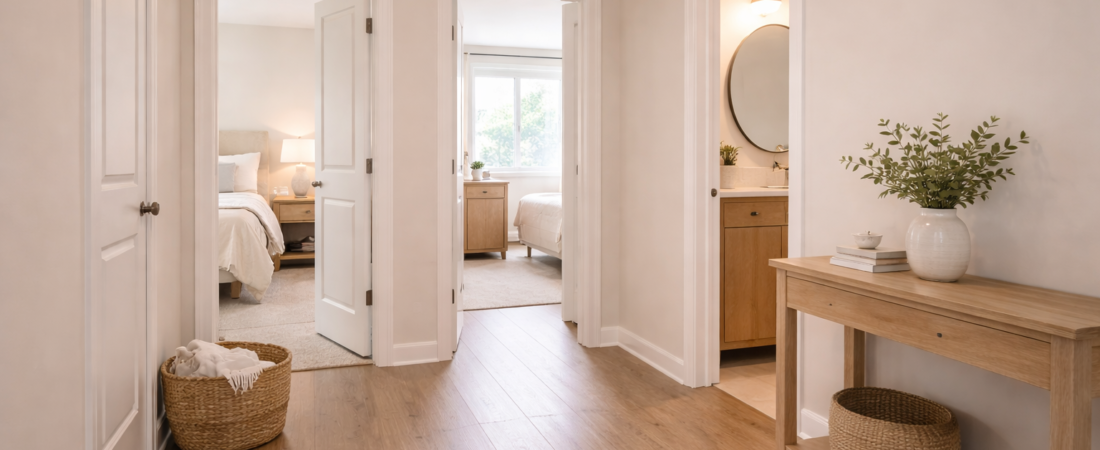
Homes are made up of different rooms with different purposes, and organisation works best when it reflects those differences. What functions well in a kitchen may not suit a bedroom or living area. Treating every room the same often leads to systems that feel awkward or difficult to maintain.
This article explains room-by-room organisation from a practical perspective. It focuses on how each space is used day to day and how organisation can support function without becoming overly complex or rigid.
Why Room-Specific Organisation Matters
Each room supports a distinct set of activities, routines, and storage needs. When organisation ignores these differences, items are often stored where they are convenient to hide rather than where they are useful.
Room-specific organisation reduces friction by keeping items close to where they are used. It also helps prevent spillover, where items migrate from one room to another because no clear home exists.
When organisation matches function, spaces tend to stay usable with less effort.
Kitchen Organisation Principles
The kitchen is one of the most actively used spaces in the home. Organisation here needs to support frequent movement, repeated tasks, and shared use.
Effective kitchen organisation focuses on:
-
Grouping items by task rather than category
-
Keeping everyday items within easy reach
-
Limiting storage of rarely used items in prime locations
-
Avoiding overcrowded drawers and cupboards
A functional kitchen does not require large amounts of storage, but it does require clarity. When tools and supplies are easy to find and return, daily tasks become smoother and less tiring.
Bedroom Storage Considerations
Bedrooms serve both storage and rest functions. Overloading bedrooms with storage can interfere with their primary purpose, which is recovery and comfort.
Bedroom organisation works best when:
-
Frequently used items are easy to access
-
Visual clutter is minimised
-
Storage does not obstruct movement or light
-
Systems support daily routines such as dressing and preparing for sleep
Storage that creates calm rather than visual density helps bedrooms remain restful and usable over time.
Living Area Organisation Basics
Living areas often support multiple activities, including relaxation, socialising, and sometimes work. Organisation in these spaces needs to balance flexibility with order.
Practical living area organisation:
-
Keeps shared items easy to access
-
Limits storage that dominates the room visually
-
Uses furniture to define zones when needed
-
Avoids turning living spaces into general storage areas
Clear organisation helps living areas remain comfortable rather than feeling like overflow spaces for the rest of the home.
Bathroom Storage Realities
Bathrooms typically have limited space and high-use storage needs. Organisation here must prioritise accessibility and simplicity.
Useful bathroom organisation focuses on:
-
Keeping daily-use items easy to reach
-
Limiting storage of unused or expired items
-
Avoiding deep or crowded storage that hides contents
-
Supporting cleaning and maintenance routines
Simple systems tend to work better than layered storage in small bathroom spaces.
Laundry and Utility Space Organisation
Laundry and utility areas often become catch-all spaces. Organisation in these rooms is most effective when it supports function rather than appearance.
Practical approaches include:
-
Clear zones for specific tasks
-
Storage that matches item frequency
-
Systems that are easy to reset
-
Avoiding storage that requires frequent rearranging
When these spaces are organised for use, they become more efficient and less frustrating.
Avoiding One-Size-Fits-All Systems
Organisation advice often promotes universal solutions, but homes benefit from systems tailored to specific spaces. What works in one room may create problems in another.
Room-by-room organisation encourages:
-
Clear boundaries between spaces
-
Systems designed around actual use
-
Flexibility as needs change
-
Reduced reliance on constant maintenance
This approach supports long-term usability rather than short-term order.
Keeping Room-Based Organisation Sustainable
Sustainable organisation does not rely on perfection. It allows for minor disruptions and adapts gradually.
Regular, small adjustments help systems stay aligned with how rooms are used. When organisation evolves with routines, spaces remain functional without requiring major resets.
Looking Ahead
Understanding how organisation differs by room provides a practical framework for managing the entire home. In the next articles, we’ll look more closely at decluttering, space management, and how routines and systems support organised living over time.
Together, these topics build a realistic approach to keeping homes usable, calm, and functional across all everyday spaces.
Related Guides
The following guides look at common organisation considerations within specific areas of the home. Each room tends to present different storage challenges and daily routines that influence how organisation systems function.