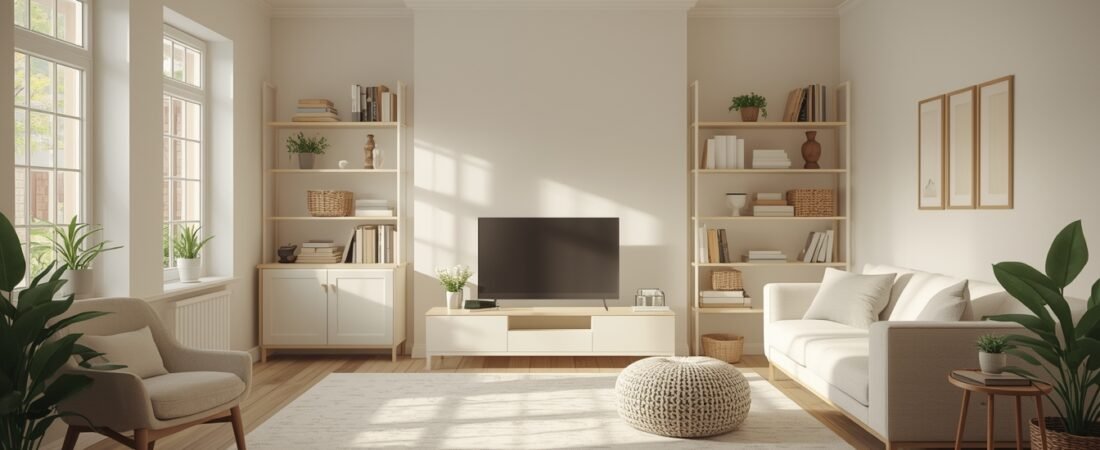
Living areas are often the most frequently used spaces in a home. Family members gather there, guests are welcomed, and many everyday activities take place in the same room. Because of this, living areas often accumulate a wide variety of items.
When organisation systems support how the room is actually used, living areas can remain comfortable and functional.
Living areas often support several activities
- Watching television
- Reading or relaxing
- Using laptops or tablets
- Socialising with family or guests
Each activity introduces different objects into the room.
Storage should support everyday use
- Media storage for electronics
- Shelving for books or magazines
- Storage baskets for blankets
When these items have predictable locations, the room is easier to maintain. The role of routine-based storage is discussed further in How Organisation Affects Daily Use of Space.
Furniture often provides most of the storage
Unlike kitchens or bedrooms, living areas may not include built-in cabinets or closets. Instead, furniture often provides most of the available storage.
- TV stands holding electronics
- Coffee tables with internal storage
- Shelving units for books and media
Surfaces tend to collect temporary items
- Remote controls placed on tables
- Books or devices left on sofas
- Mail or small items placed on side tables
Providing nearby storage helps prevent these items from spreading throughout the room.
Simple organisation helps the room stay comfortable
Clear zones for common items allow the room to support everyday activities without becoming cluttered. The broader structure behind those systems is explored in Home Organisation Basics: How Functional Spaces Stay Usable Over Time.