The kitchen is one of the most frequently used spaces in a home. Unlike storage areas that are accessed occasionally, the kitchen supports daily routines: preparing meals, cleaning, packing lunches, and storing essentials. Because of this, organisation in a kitchen is less about appearance and more about reducing repeated friction.
This article outlines practical principles that make kitchens easier to use and maintain over time.
Start With Use Frequency, Not Storage Type
A common mistake in kitchen organisation is grouping items by category alone. While categories matter, daily usability improves when placement reflects how often something is used.
Items used every day should live between waist and shoulder height and within easy reach of their point of use. For example:
-
Everyday plates and glasses near the dishwasher or sink
-
Frequently used utensils close to the cooktop
-
Coffee supplies grouped near the kettle or machine
Less frequently used items — seasonal bakeware, specialty appliances — can move to higher shelves or lower cabinets. This approach reduces unnecessary movement and repeated bending or reaching.
Organise by Task Zones
Kitchens function more smoothly when organised around tasks rather than furniture pieces.
Most kitchens naturally support several working zones:
-
Preparation zone (bench space, knives, chopping boards)
-
Cooking zone (cooktop, oven, spices, utensils)
-
Cleaning zone (sink, dishwasher, cleaning supplies)
-
Storage zone (pantry, refrigerator, dry goods)
When items are stored near the task they support, movement becomes more direct and routines require less adjustment. This principle often resolves clutter without adding new storage solutions.
Limit Bench Surface Storage
Clear bench space improves both function and visual calm. However, a completely empty bench may not be realistic or practical.
A useful rule is to keep only what is used daily on the bench. Everything else should have a defined storage location. Small appliances that are used occasionally but not daily often benefit from cabinet storage, even if that means adjusting shelf height or relocating other items.
Reducing bench storage also makes cleaning faster and more consistent.
Store Like With Like — Within Reason
Grouping similar items remains useful, especially inside drawers and cupboards. For example:
-
All baking tools together
-
Food containers stored in one location
-
Cleaning cloths in a single drawer or basket
However, this principle should not override task-based placement. If storing all utensils together creates unnecessary walking during cooking, adjust accordingly. Function takes priority over strict categorisation.
Make Drawers Work Harder Than Cabinets
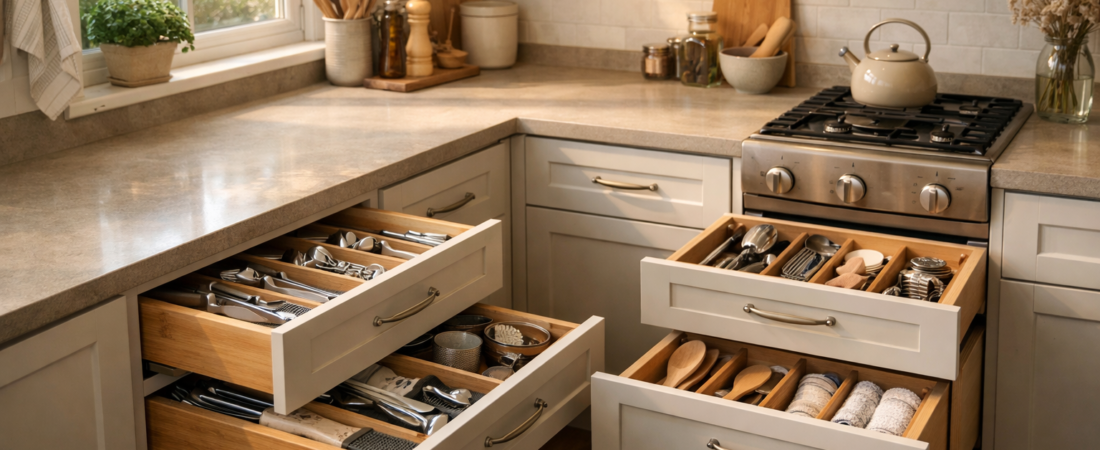
Where possible, drawers provide easier access than deep cupboards. They reduce the need to reach into dark spaces and make it easier to see everything at once.
If your kitchen includes deep cabinets, adding internal dividers or pull-out baskets can simulate drawer-style access. The goal is visibility and reachability, not perfection.
Reduce Duplicate Items
Kitchens often accumulate duplicate tools and containers. Reducing duplicates simplifies storage decisions and frees up space.
Consider reviewing:
-
Extra mixing bowls
-
Duplicate measuring cups
-
Excess food containers without matching lids
-
Unused gadgets
Removing unnecessary items creates space without requiring new storage systems.
Keep the Layout Stable
Frequent rearranging can create more friction than it solves. Once a layout supports daily tasks comfortably, stability becomes valuable.
Minor refinements are normal, but large changes should only happen if a consistent problem is identified. A stable layout allows habits to form, which reduces mental effort during everyday use.
Maintain With Small Resets
Kitchens rarely stay organised without maintenance. Short, regular resets are more effective than occasional large reorganising sessions.
Examples include:
-
Returning items to their zones at the end of the day
-
Clearing and wiping benches after cooking
-
Checking pantry items before shopping
These small resets protect the structure you have already created.
Kitchen organisation improves when it reduces daily friction rather than chasing visual perfection. Placement based on use, clear task zones, and stable routines create a kitchen that works quietly in the background.
For broader principles that apply across the home, see Room-by-Room Organisation: Practical Principles for Everyday Spaces.