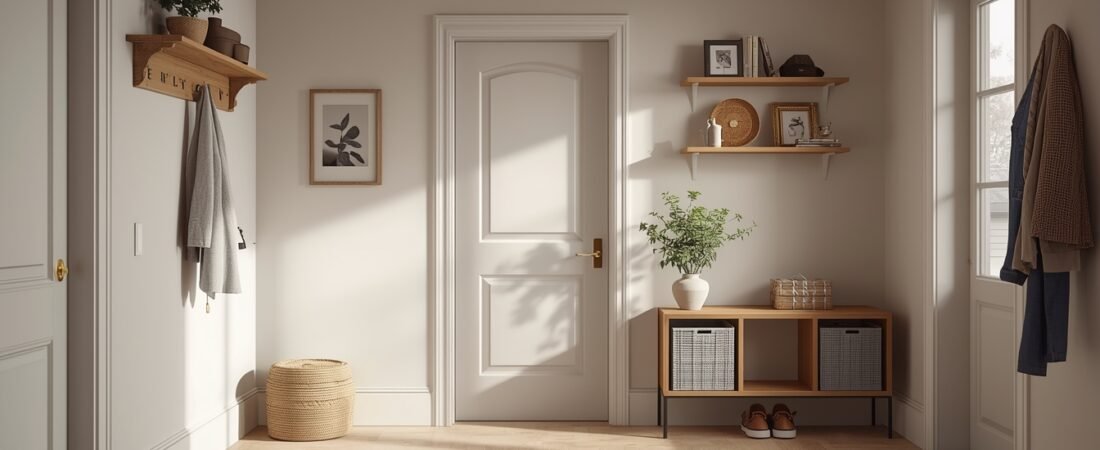
Most homes gradually accumulate belongings over time. New items enter through everyday purchases, hobbies, seasonal changes, and household needs. While this process happens naturally, it can slowly affect how storage systems function.
Long-term space management focuses on maintaining balance between the number of items in a home and the storage systems designed to hold them.
Homes naturally change over time
- New hobbies or equipment
- Seasonal clothing and household items
- Changes in household members
- Shifts in how rooms are used
These changes gradually place new demands on existing storage systems.
Storage capacity has practical limits
- Closets becoming crowded
- Items stored in multiple rooms
- Surfaces used for temporary storage
Recognising these signs early allows households to make adjustments before clutter becomes difficult to manage. The broader principles behind this are explored in Decluttering and Space Management: Keeping Homes Functional Over Time.
Regular reviews help maintain balance
- Checking pantry shelves occasionally
- Reviewing closets during seasonal changes
- Sorting household supplies when cleaning
Organisation supports long-term management
- Clear categories for items
- Accessible storage locations
- Defined boundaries for storage areas
These structures help prevent belongings from spreading into unrelated spaces. The relationship between organisation and everyday routines is discussed further in How Organisation Affects Daily Use of Space.
Small adjustments keep homes functional
Rather than relying on occasional large projects, long-term space management encourages gradual adjustments that help homes remain comfortable and manageable over time.