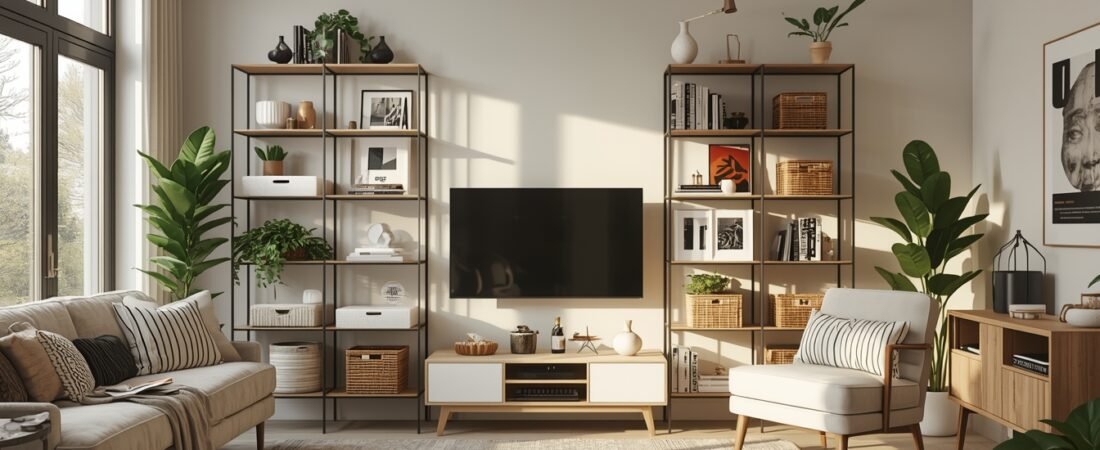
Furniture often plays a larger organisational role than people initially expect. In many homes, tables, shelves, cabinets, and seating also function as storage. When rooms are limited in size, furniture may need to serve more than one purpose.
Multi-purpose furniture can help homes remain functional by combining everyday use with storage capacity.
What multi-purpose furniture means
Multi-purpose furniture refers to pieces designed to serve more than one function.
- Beds with built-in storage drawers
- Coffee tables with internal storage
- Ottomans that double as storage containers
- Desks that include shelving or cabinets
- Benches with hidden compartments
It can support smaller spaces
In smaller homes, furniture that serves several roles can reduce the number of separate storage pieces required. Instead of adding additional cabinets or shelves, storage becomes integrated into the furniture already present in the room.
It is often especially useful in studio apartments, shared living spaces, and rooms that serve several functions. The broader context for these small-space choices is covered in Organising Small and Shared Spaces Without Permanent Changes.
Accessibility should remain a priority
While storage furniture can be useful, it is important that the storage areas remain easy to access.
- Drawers should open easily.
- Hidden compartments are better for occasional items.
- Stored categories should stay clear and simple.
Furniture should match routines
The effectiveness of multi-purpose furniture depends largely on how well it supports everyday routines.
- Living room furniture storing blankets or electronics
- Bedroom furniture holding seasonal clothing
- Entryway benches storing shoes or bags
The relationship between organisation and routine use is explored further in How Organisation Affects Daily Use of Space.
Balance storage with comfort
Rooms filled entirely with storage furniture may begin to feel crowded or overly complex. A balanced approach usually works best, combining furniture that supports storage with open areas that allow the room to remain comfortable and easy to move through.