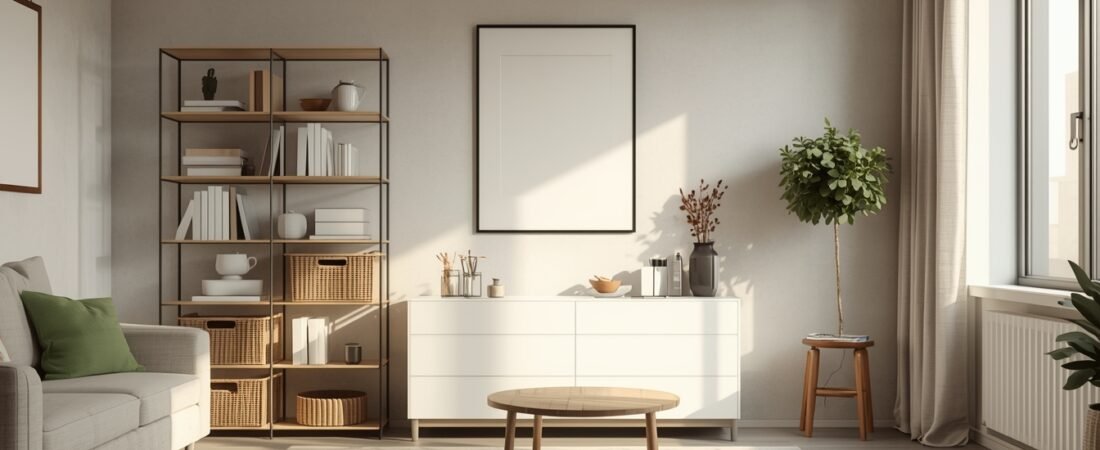
Many people want to organise their homes but are unable to make permanent changes to the space. Renters, shared households, and people living in temporary accommodation often cannot install built-in shelves, change cabinets, or modify walls.
Despite these limitations, homes can still be organised effectively. Organisation does not always require structural changes.
Work within the limits of the space
When permanent changes are not possible, organisation systems must work within the existing structure of the home.
- No drilling or wall-mounted shelves
- Restrictions on modifying cabinets or closets
- Limited control over built-in storage
- Shared storage areas with other occupants
Portable storage adds flexibility
Portable storage systems are often the most useful tools when permanent changes are not allowed.
- Freestanding shelving units
- Stackable storage bins
- Rolling carts for supplies
- Under-bed storage containers
- Drawer dividers and organisers
These solutions help create structure without altering the property itself. The broader role of storage choices is explained in Storage Solutions Explained: Choosing Storage That Actually Works.
Furniture can support organisation
Furniture often plays an important role in organising homes where permanent changes are not possible. Pieces that include built-in storage can help create additional capacity without modifying the structure of the room.
Clear zones still matter
Even without permanent fixtures, organisation systems benefit from clear zones within each room.
- Entry areas for bags and daily essentials
- Kitchen zones for cooking tools and food supplies
- Living room areas for electronics and media
The role of organisation zones in daily routines is explained further in How Organisation Affects Daily Use of Space.
Non-permanent systems can still work well
When portable storage, thoughtful placement, and simple categories are used together, homes can remain functional and manageable even without structural changes.