When homes begin to feel crowded, it is common to assume that additional storage capacity is needed. Cabinets may be added, shelves installed, or containers introduced to hold more belongings.
However, storage challenges are not always caused by insufficient capacity. In many cases, the issue involves accessibility rather than the amount of available storage.
Storage capacity describes how much can be stored
Storage capacity refers to the total volume of items a storage system can hold.
- Closets with large hanging areas
- Deep cabinets with multiple shelves
- Large storage containers
These systems may hold many items, but that does not always mean the items remain easy to access.
Accessibility determines how easy a system is to use
Accessibility refers to how easy it is to retrieve and return items within storage spaces.
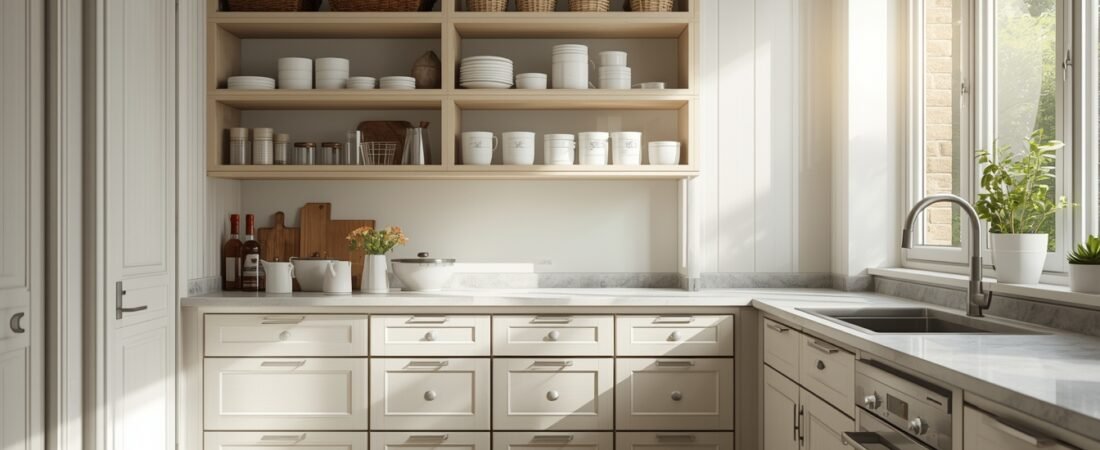
- Open shelving for frequently used items
- Drawers that allow items to be seen easily
- Storage zones near the activities they support
The distinction between storage and organisation is explained further in Organisation vs Storage: Understanding the Difference.
High capacity can reduce usability
Some storage systems maximise capacity but reduce accessibility.
- Deep cabinets where items are difficult to reach
- Large containers holding mixed items
- Closets packed tightly with clothing
In these situations, storage may technically exist but still feel difficult to use.
Accessible storage supports routine use
When items are easy to access, they are also easier to return after use. This helps maintain organisation over time.
The connection between accessibility and behaviour is discussed further in How Organisation Affects Daily Use of Space.
Balanced systems usually work best
Effective storage systems often balance capacity and accessibility. When both are considered, storage areas remain practical and easier to maintain.