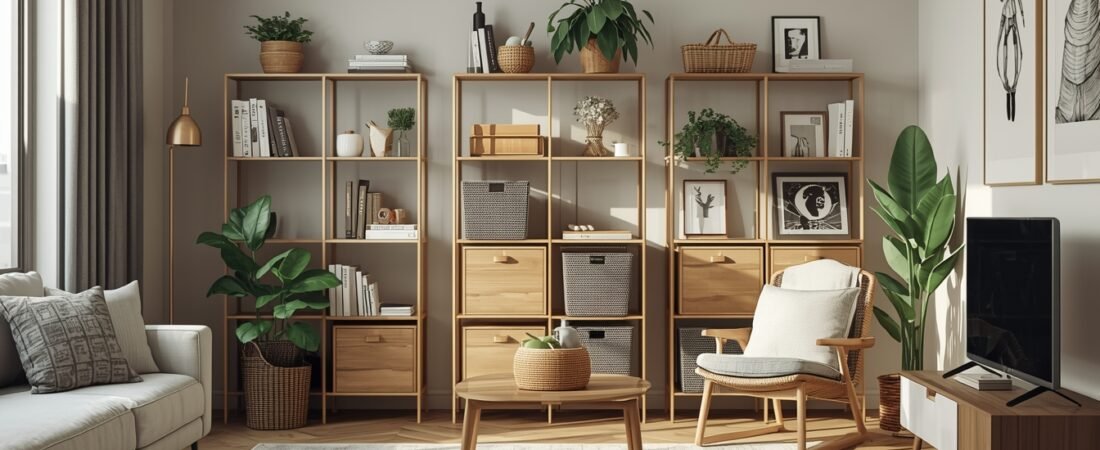
Many households share living spaces with other people. Family members, housemates, or partners often use the same kitchens, living rooms, bathrooms, and storage areas. While shared living arrangements are common, they can introduce additional challenges when it comes to organising belongings.
When multiple people use the same spaces, storage systems must support different routines, habits, and types of belongings.
More people bring more categories
Each person brings their own clothing, personal items, equipment, and everyday supplies. This increase in categories can place pressure on existing storage systems, especially in rooms designed for a single user.
- Personal toiletries and bathroom supplies
- Kitchen tools and containers
- Work or study materials
- Hobby equipment or electronics
Shared storage needs clear boundaries
In many shared homes, storage works best when clear boundaries exist between personal belongings and shared household items.
- Designated shelves for each person
- Separate drawers for personal items
- Shared cabinets for household supplies
The broader principles behind organising shared environments are explored in Organising Small and Shared Spaces Without Permanent Changes.
Different routines influence storage patterns
Each person in a household often follows slightly different routines. One person may cook frequently, while another may primarily use the kitchen for quick meals. These differences can influence how storage systems are used.
Shared surfaces often become temporary storage
Tables, countertops, and entryway surfaces are frequently used by multiple people throughout the day. Because these areas are easily accessible, they often become temporary storage spots for items that are still in use.
That relationship between convenience and placement is discussed further in How Organisation Affects Daily Use of Space.
Simple systems are easier for everyone
Organisation systems in shared homes tend to work best when they are easy for everyone to understand. Clear storage zones, accessible locations, and simple categories reduce the effort required to keep shared areas manageable.