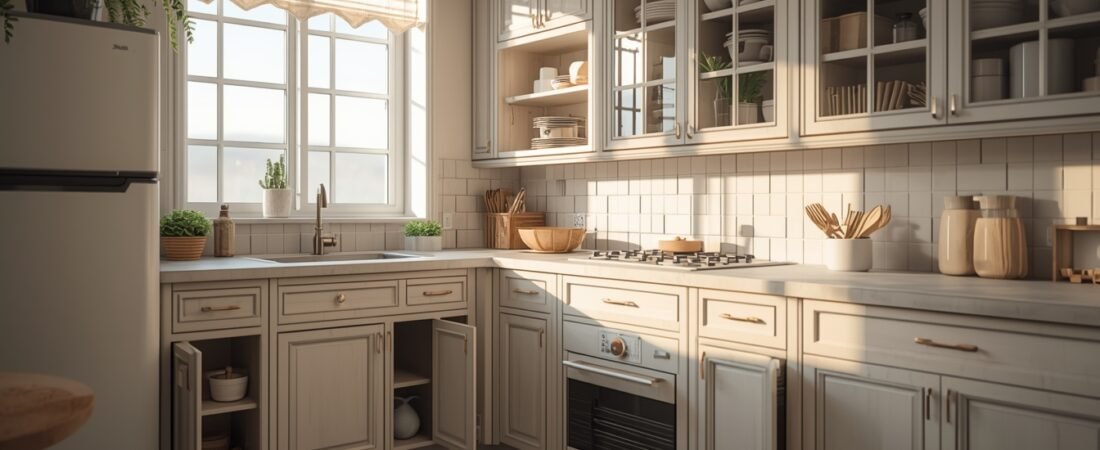
Many homes attempt to solve storage challenges by expanding horizontally. Additional cabinets are added along walls, furniture grows wider, and more floor space is used to hold belongings. While this can sometimes help, it also consumes valuable living space.
Vertical storage offers an alternative by using the height of a space rather than only the floor area.
Vertical storage uses the full height of a room
Most homes contain unused vertical space above furniture, cabinets, or doorways. Vertical storage takes advantage of this height by introducing shelves, wall-mounted storage, or tall cabinets that extend upward rather than outward.
- Wall-mounted shelving above desks or work surfaces
- Tall bookcases that extend close to the ceiling
- Hooks or rails mounted on walls
- Stackable storage containers
It works best for specific kinds of items
Not every household item is suitable for vertical storage. The most effective systems tend to store objects that are lightweight, regularly used, or easy to retrieve.
- Books and reading materials
- Small household supplies
- Kitchen items used regularly
- Tools or hobby equipment
The broader storage framework behind these decisions is discussed in Storage Solutions Explained: Choosing Storage That Actually Works.
Accessibility still matters
While vertical storage increases capacity, accessibility must always be considered. Items placed too high may become inconvenient to reach, which can discourage people from using the storage area regularly.
- Lower shelves for items used daily
- Mid-level shelves for regularly used belongings
- Upper shelves for seasonal or rarely used items
Vertical storage can reduce surface clutter
When storage options are limited, items often accumulate on horizontal surfaces such as countertops, tables, or desks. Adding vertical storage near these areas can provide alternative locations for objects that would otherwise remain on surfaces.
Placement should match routines
Like all organisation systems, vertical storage works best when it aligns with how the household uses a space. The way storage placement influences behaviour is explored further in How Organisation Affects Daily Use of Space.
Balance remains important
Although vertical storage can be helpful, it is most effective when used selectively. Filling every wall with shelves or tall storage can make a room feel crowded. Used thoughtfully, it can increase capacity without sacrificing usable space.