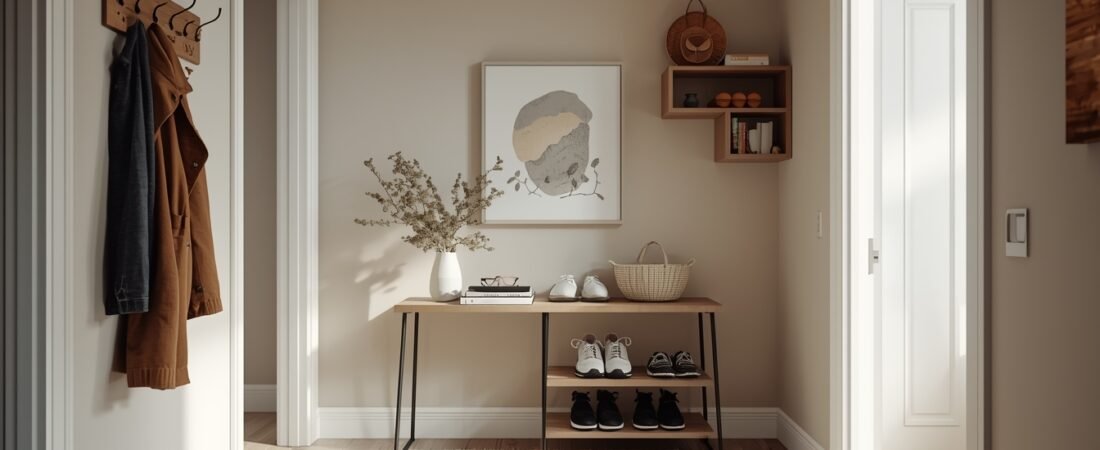
Many homes experience the same pattern after decluttering. Storage areas are cleared, surfaces feel calmer, and rooms become easier to use. For a period of time the space may feel noticeably more manageable.
Over time, however, clutter often begins to return. Items gradually reappear on surfaces, cabinets become crowded again, and temporary storage areas begin to form.
New items enter the home gradually
- New kitchen tools added over time
- Seasonal clothing rotating through closets
- Household supplies purchased in advance
Because these additions happen slowly, they may not feel significant at first.
Storage systems may remain unchanged
After a decluttering effort, the organisation system itself may remain exactly the same. If the household routine evolves or the number of items increases, the existing structure may no longer support daily use as effectively.
- Items placed temporarily on surfaces
- Storage categories becoming mixed
- Cabinets gradually becoming crowded
The broader principles behind maintaining functional organisation are discussed in Decluttering and Space Management: Keeping Homes Functional Over Time.
Daily routines influence where items stay
When storage locations are inconvenient, objects may gradually remain in more accessible areas. That relationship between behaviour and placement is explained further in How Organisation Affects Daily Use of Space.
Temporary storage areas become common
- Tables near entryways
- Kitchen counters
- Desks or side tables
If these areas are used repeatedly, they can gradually become permanent storage zones.
Clutter usually returns slowly
Clutter rarely returns all at once. It usually builds gradually through everyday routines and small changes in storage patterns. Recognising those shifts early makes small adjustments easier.