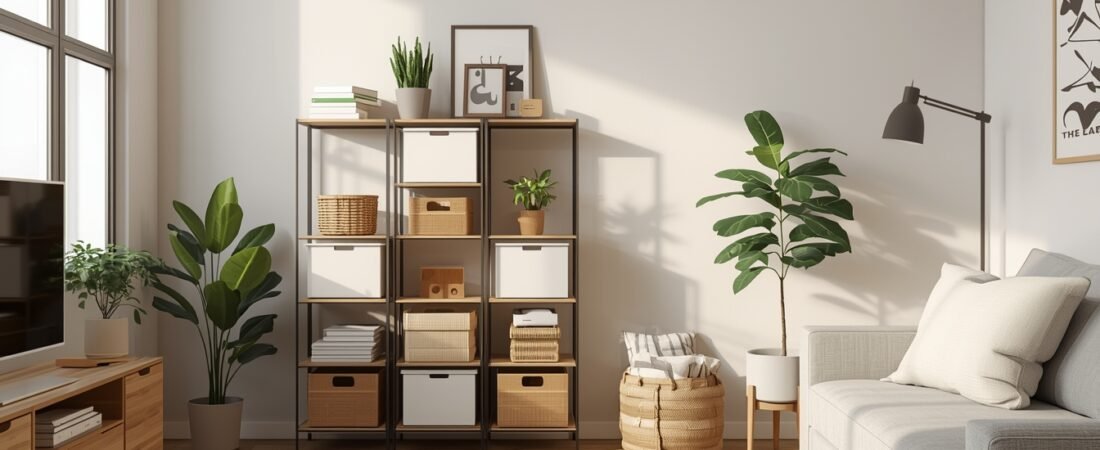
Many organised homes rely on more than storage systems alone. Behind the visible structure of shelves and cabinets, household routines often play an important role in maintaining order. These routines form what can be described as household systems.
Household systems are the small patterns of behaviour that guide how items are used, stored, and returned during everyday activities.
Household systems guide everyday behaviour
- Sorting mail when it enters the home
- Returning tools after completing tasks
- Placing daily items in designated locations
These small patterns help reduce confusion about where belongings belong.
Systems reduce the need for constant decisions
When households rely on consistent routines, fewer decisions are required during everyday activities. Items are returned to familiar locations without needing to reconsider where they should be stored.
This consistency helps prevent clutter because objects are less likely to be placed temporarily on nearby surfaces. The relationship between organisation and behaviour is explained in How Organisation Affects Daily Use of Space.
Systems support storage structures
Storage solutions such as cabinets, drawers, and shelves provide the physical structure for organisation. Household systems ensure those storage areas continue functioning properly.
- Tools are returned after use.
- Mail is processed rather than piled.
- Personal items stay within their zones.
Simple systems are usually most effective
- Clear storage locations
- Simple routines repeated regularly
- Accessible storage areas
These characteristics allow systems to function naturally during daily routines.
Systems help organisation last
While storage solutions create the physical structure of organisation, household systems maintain that structure through everyday behaviour. The broader organisational framework behind this is discussed in Home Organisation Basics: How Functional Spaces Stay Usable Over Time.