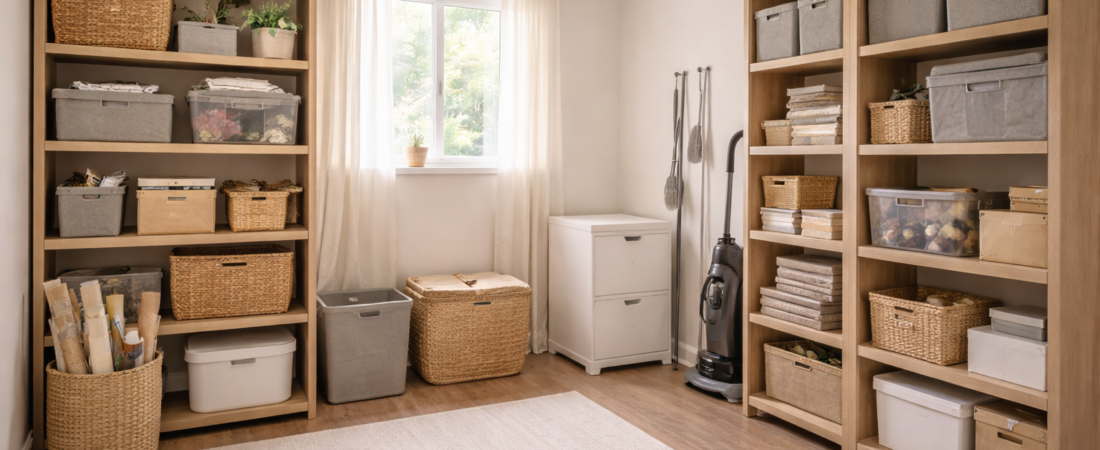
Decluttering is often treated as a one-time event, but in practice it is an ongoing process. Homes change as routines, priorities, and circumstances shift. Without a broader approach to space management, clutter tends to return—even after thorough decluttering efforts.
This article explains decluttering as part of long-term space management. It focuses on why decluttering is difficult to maintain, how well-intentioned efforts can sometimes make things worse, and what supports functional homes over time.
Why Decluttering Is Difficult to Maintain
Decluttering is challenging to sustain because it often addresses symptoms rather than causes. Removing items can create immediate relief, but if storage systems, habits, or decision processes remain unchanged, clutter gradually rebuilds.
Many homes accumulate items through small, ongoing decisions rather than major purchases. Gifts, replacements, paperwork, and items kept “just in case” all add to volume over time. Without regular adjustment, space becomes overburdened again.
Recognising decluttering as a recurring process helps set realistic expectations. The goal is not permanent emptiness, but manageable, usable space.
Decluttering Without Disruption
Large decluttering projects can be physically and mentally demanding. They may also disrupt routines, making it harder to maintain progress once the initial effort ends.
Decluttering works best when approached gradually. Small, targeted decisions made consistently are often more effective than intensive clean-outs. This approach allows routines to continue while space is adjusted piece by piece.
Decluttering without disruption focuses on reducing friction rather than creating dramatic change. When the process fits into everyday life, it is easier to sustain.
Decision Fatigue and Clutter
Decision fatigue plays a significant role in clutter accumulation. Each item requires a decision about where it belongs, whether it is still useful, and whether it should be kept.
When too many decisions are required at once, people are more likely to postpone them. Items are set aside, stored temporarily, or left in place. Over time, these deferred decisions contribute to clutter.
Reducing decision fatigue supports better space management. Clear categories, consistent storage, and simple rules help limit the number of decisions required on a daily basis.
When Decluttering Makes Things Worse
Decluttering can sometimes increase stress rather than reduce it. This often happens when items are removed without considering how space will function afterward.
Common issues include:
-
Removing items that support routine
-
Creating empty space without a clear purpose
-
Shifting clutter from one area to another
-
Overcomplicating storage after decluttering
Effective decluttering considers both what is removed and how remaining items will be used. Without this balance, spaces may feel incomplete or harder to manage.
Space Management Beyond Decluttering
Space management looks beyond individual items and considers how rooms function as a whole. It focuses on aligning space with daily use rather than simply reducing volume.
Good space management includes:
-
Matching storage to item frequency
-
Ensuring clear movement paths
-
Avoiding overcrowded surfaces
-
Allowing flexibility as needs change
This broader perspective helps prevent clutter from returning and supports long-term usability.
Managing Space as Needs Change
Homes evolve as people’s needs change. What is useful at one stage of life may become unnecessary or inconvenient later.
Regular, low-effort reviews help keep spaces aligned with current use. Adjusting storage, relocating items, or simplifying systems prevents small issues from becoming larger problems.
Space management is most effective when it adapts gradually rather than reacting to overload.
Long-Term Approaches to Keeping Spaces Functional
Sustainable decluttering relies on habits rather than events. Small, repeatable practices tend to have a greater impact than occasional large efforts.
Long-term approaches include:
-
Regular reassessment of stored items
-
Limiting intake where possible
-
Keeping storage visible and accessible
-
Adjusting systems before they fail
These practices support homes that remain functional without constant intervention.
Looking Ahead
Decluttering is one part of maintaining organised spaces, but it works best within a broader system of space management. In the next articles, we’ll explore how routines and household systems help prevent clutter from returning and how to adjust organisation as needs evolve.
Together, these topics build a practical framework for keeping homes usable, calm, and supportive over time.
Related Guides
The following guides explore the practical challenges that often appear when households try to reduce clutter and maintain organised spaces over time.