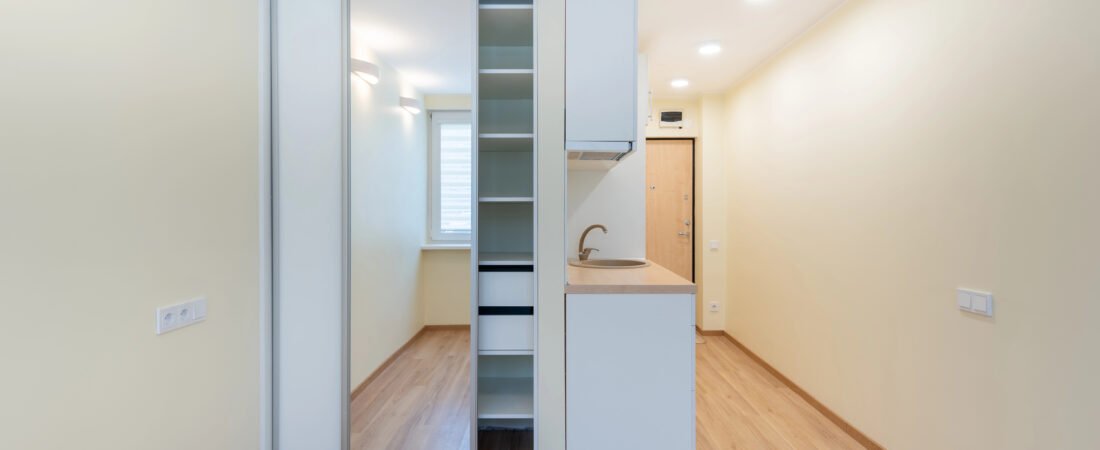
Small and shared spaces place different demands on organisation than larger, private homes. Limited floor area, shared storage, and restrictions on permanent changes can make even well-intentioned systems feel ineffective over time.
Organisation in these environments is less about maximising space and more about managing use. When systems reflect how people actually live in small or shared homes, spaces tend to remain functional and less stressful, even without structural changes.
This article explains the principles that support organisation in small and shared spaces, with a focus on flexibility, practicality, and long-term usability.
Why Small Spaces Feel Harder to Organise
Small spaces magnify friction. When storage is limited, every item competes for space, and small inefficiencies become noticeable quickly. Items left out have a greater visual and physical impact, and clutter can make rooms feel crowded faster than in larger homes.
In many cases, small spaces are not poorly designed, but overburdened. They are often expected to support multiple functions, such as work, rest, and storage, within the same area. Without clear organisation, these overlapping uses can conflict.
Understanding that small spaces require different organisational strategies helps reset expectations. The goal is not to eliminate clutter entirely, but to manage it in ways that support daily use.
Organisation Challenges in Shared Homes
Shared homes introduce additional complexity. Storage decisions affect more than one person, and systems must accommodate different habits, schedules, and priorities.
Common challenges include:
-
Unclear ownership of shared items
-
Uneven use of storage space
-
Items being moved or returned inconsistently
-
Systems that work for one person but not others
Effective organisation in shared spaces prioritises clarity and consistency. Clearly defined storage zones, simple rules, and predictable layouts reduce friction and make shared systems easier to maintain.
Organising Without Permanent Changes
Many people in small or shared homes cannot make permanent changes such as installing built-in storage or altering layouts. This does not prevent effective organisation, but it does require a different approach.
Non-permanent organisation relies on:
-
Portable storage solutions
-
Reconfigurable furniture
-
Temporary dividers or organisers
-
Systems that can be removed or adjusted easily
These approaches allow spaces to adapt as needs change, without committing to fixed solutions that may become restrictive over time.
Multi-Purpose Furniture and Practical Use
Multi-purpose furniture is often recommended for small spaces, but it only works well when its use is realistic. Furniture that requires constant setup, heavy lifting, or complex reconfiguration can become a barrier rather than a solution.
The most effective multi-purpose pieces support everyday routines with minimal effort. Storage beds, shelving units that divide space, or tables with integrated storage can be helpful when they align with how the space is used daily.
If a piece of furniture is consistently avoided or used incorrectly, it may not be serving its intended purpose, regardless of how efficient it appears on paper.
Storage in Rental Homes
Rental homes often limit modifications, which can make organisation feel constrained. However, rental-friendly organisation focuses on adaptability rather than permanence.
Using removable solutions, maintaining flexibility, and avoiding systems that rely on fixed installations helps keep rental spaces functional. Organisation that can move with the occupant also reduces the need to rebuild systems when circumstances change.
The most sustainable rental organisation strategies are those that prioritise ease of use over visual perfection.
Prioritising Use Over Capacity
In small and shared spaces, storage capacity matters less than usability. Storage that is technically available but difficult to access does not support daily living.
Prioritising use means:
-
Keeping frequently used items easy to reach
-
Limiting storage of rarely used items
-
Avoiding deep or hidden storage for everyday needs
-
Adjusting systems as habits change
When organisation reflects real use, spaces feel more manageable, even when storage is limited.
Keeping Small and Shared Spaces Functional Over Time
Organisation in small and shared homes works best when it remains flexible. Rigid systems tend to fail as routines shift or occupants change.
Regular, low-effort adjustments help prevent overload. Small changes made early are easier to manage than large resets after systems break down completely.
Functional organisation supports shared living by reducing friction, preserving usable space, and helping environments remain workable without constant effort.
Looking Ahead
Small and shared spaces benefit most from organisation strategies that emphasise adaptability and clarity. In the next articles, we’ll explore why small spaces feel harder to manage, how shared storage challenges arise, and what approaches help maintain function without permanent changes.
Together, these topics build a practical understanding of how to organise limited spaces in ways that support everyday living rather than complicate it.
Related Guides
The following guides explore common challenges that appear in small homes, rental spaces, and shared environments, along with practical considerations for organising spaces that cannot be permanently modified.